Monday, April 22, 2013

Wabi-Sabi Living: the Ten-Item Wardrobe

All things wabi-sabi have been floating through my brain these days.  Ideas like - simplicity, serenity, understated elegance.  Lovely words!  Uplifting words!  Words that I want more of in my life.  One of the things I've been thinking about is how this applies to the clothes I wear. 

Wouldn't it be nice to have a well-organized closet containing just enough clothing so that you always feel well dressed for any occasion.  That is my definition of how wabi-sabi applies to our wardrobes.  A noble goal, but how to attain it?


When I read about the ten-item wardrobe I was intrigued.  According to Jennifer at The Daily Connoisseur, this is how chic French women dress.  They value quality over quantity and stock their wardrobes with just a few well-curated classic items that all work together. 

Of course, there are pros and cons of sticking to a ten-item wardrobe.  Some thoughts and observations from Jennifer are as follows:

PROS
1. Dressing in the morning is streamlined as everything mixes and matches.  
2. It is easy to take stock of clothes that are wearing out when you only have ten items
3. Since each item has to pull its weight, an item that is worn out will be replaced rather than just stored.  
4. You will be less likely to go on mindless shopping expeditions since you already have a stocked wardrobe.  
5.  And finally, with only ten items of clothing your closet will be a thing of beauty.

CONS
1.  If all your clothes get dirty at once, it could be a problem.
2.  Having such a limited variety of clothing items may mean you get tired of wearing the same pieces of clothes or the same colours all the time (okay, this last one is mine).  

While I'm not a clothes-horse I regularly wear more than ten items, but I'm always up for a personal challenge and this one sounded interesting. I decided I would challenge myself to see if I could survive wearing just ten pieces of clothing for a month. 

So are you ready to see the ten items I lovingly selected (it was agonizing! like choosing your ten favourite children). And just so you know my ten-item wardrobe doesn't include the following: shoes, outerwear, scarves, necklaces, undergarments, sleepwear, or exercise wear.  It is still quite cool here in Ontario although some days are warming up in the afternoon, so I had to include enough layers to keep me comfortable in a lot of different temperatures.


10 Item Wardrobe


I thought these ten items would work well together (with the exception of the red cardigan and the rust cords). I could have included another neutral cardigan in place of the red one, but I felt I needed some colour (I like to wear bright cardigans to add some colour to my outfits.)

  1. Cream/navy striped shirt (Banana Republic) 
  2. Flowered blouse (Eddie Bauer) 
  3. White V-neck shirt (Eddie Bauer) 
  4. Black V-neck shirt (Eddie Bauer) 
  5. Gray cardigan (Eddie Bauer) 
  6. Red cardigan (Eddie Bauer) 
  7. Jeans (Eddie Bauer) 
  8. Rust cords (Joe) 
  9. Black pants (Banana Republic) 
  10. Black skirt (I've had it for years)

I'll keep you posted as to how I'm doing and, if I remember, I'll take some photos too.

Do you think you could survive?

When I told my son what I'm doing, he just shrugged and said that that is what he wears all the time. The boy's a wabi-sabi master!


Sunday, April 21, 2013

Indian Dinner

I really need to get serious and catch up on the recipes from our round-the-world-cooking adventure.  We just cooked a Cambodian dinner and I still haven't got our Indian dinner posted, so here goes.

It was difficult to decide what to cook for India as there are so many different dishes to choose from.  After some pondering, we selected chicken vindaloo (adapted from here) and served it with dhal and naan bread.  It was delicious! And was a feast for the eyes - beginning with the spices used to make the vindaloo.  Isn't that the prettiest combination of browns.


CHICKEN VINDALOO
Ingredients:
1 tsp ground cumin
1 tsp ground turmeric
1 or 2 tsp garam masala (see recipe below)
1/4 tsp ground cinnamon
2 tsp mustard powder
1 tsp ground coriander
1 tsp cayenne pepper
2 cm cube of peeled ginger, finely chopped
3 tbsp white wine vinegar
1 tsp sugar
150 ml vegetable oil
4-8 garlic cloves, finely chopped
3 red onions, finely chopped

1 tsp pepper flakes (the original recipe calls for finely chopped red chilies, but I wanted a milder vindaloo)
4 skinless chicken breasts cut into bite size pieces
500 g tin diced tomatoes
1-2 tbsp of tomato purée to taste (I didn't include this)
Salt and pepper to taste

Method:

1.  Combine the ginger, cumin, cinnamon, mustard, coriander turmeric, garam masala, and cayenne pepper into a bowl and add the vinegar and sugar and mix thoroughly to make a paste.
2.  Heat the oil in a wok or large frying pan. Add the garlic and the onion and cook over a medium heat until softened, for approx 5 mins.
3.  Once the onion and garlic have softened, add the chicken pieces and cook for approx 3 minutes until the chicken starts to colour.
4.  Now add the chilies, tomatoes, tomato purée, and the vindaloo spice paste.
5.  Add salt and pepper to taste, and simmer, stirring occasionally, for approx 1 hour. It is important not to let the chicken vindaloo dry out, so add a 1/2 cup of water as necessary. Taste to adjust seasoning as needed.

Serve on rice with dhal and naan bread.

Garam Masala (from here):
1 tablespoon ground cumin
1 1/2 teaspoons ground coriander
1 1/2 teaspoons ground cardamom
1 1/2 teaspoons ground pepper
1 teaspoon ground cinnamon
1/2 teaspoon ground cloves
1/2 teaspoon ground nutmeg


Naan bread made by William

DHAL (adapted from here)
Ingredients:
1 cup red lentils (I didn't have red lentils so used brown, but they don't soften as well so I'd recommend ensuring you have red)
3 cups water
1/4 teaspoon ground turmeric
2 tablespoons vegetable oil
1/2 teaspoon ground mustard powder
1/2 teaspoon cumin seeds
1/8 teaspoon hot red pepper flakes
1/2 cup canned unsweetened coconut milk
2 teaspoons fresh lemon juice
1/2 teaspoon salt


Method:
1.  Bring lentils and 3 cups water to a boil with turmeric.  Gently simmer, partially covered, stirring occasionally, until falling apart, about 20 minutes.
2.  When lentils are cooked, heat oil in a small heavy skillet over medium-high heat until it shimmers, then add mustard powder, cumin seeds, and red pepper flakes for about 1 minute. Stir spice mixture into lentils with coconut milk, lemon juice, and salt and bring to a simmer.
Serve with naan.


We loved the chicken vindaloo and I have a craving to make it again.  The dhal would have been better with the right kind of lentils (next time).

I need some suggestions for other Indian dishes to make. What's your favourite? There are so many different Indian recipes to choose from that I'm itching to try a few more, but in terms of our round-the-world cooking adventure India is done and we are on to Bangladesh.
Pin It

Thursday, April 18, 2013

Tea - From India with Love


Are you a tea drinker? I love a cup of tea, especially first thing in the morning. I used to drink coffee, but switched about ten years ago and I'm so glad I did. Tea is so calming and doesn't leave that bad taste in your mouth afterward.

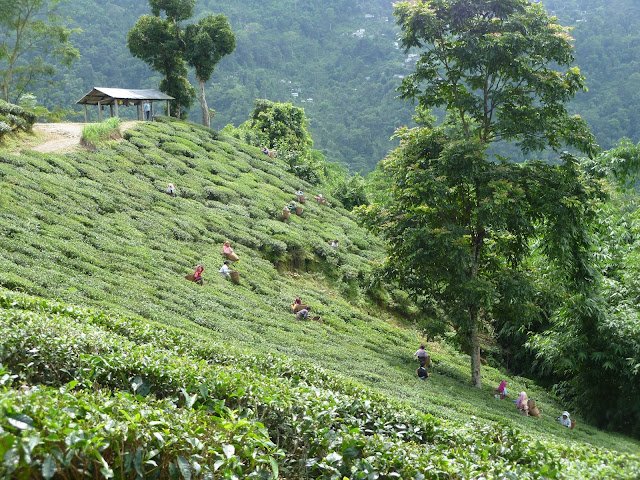
I was looking through the photos I took when I was in India almost two years ago now (I can't believe it was that long ago) and wanted to share with you the glimpses of life on a tea plantation. Next time you have a cup of tea you can think of these scenes for the background story.


We visited the Glenburn Tea Estate near Darjeeling in north-eastern India. It is a lovely historic plantation set on top of a hill in the Himalayas.

I loved being shown all the stages of the tea process. We were able to hike through the tea gardens themselves and see the tea plants up close.


Did you know that tea bushes are pruned so they end up being like a bonsai. Some of them are 200 years old, but remain short with very thick trunks.  


We saw women picking tea leaves in one of the fields.  Since only the top two leaves at the end of each branch are picked and the tea is grown on steep mountain slopes, picking the tea leaves can only be done by hand.  I'm sure it was hard work carrying a large basket strapped to your forehead up and down the mountains all day so the smiles we got were impressive.


We toured the factory and were shown the many steps necessary to prepare the leaves so they are ready to be made into a wonderful cup of tea.


It is a very complex process and I have forgotten most of what I learned, but I haven't forgotten how much I loved the stenciled boxes that they use to ship tea around the world.  I would loved to have brought one home if I could have figured out how to do it.


We also sampled all the different types of tea produced at Glenburn and how the tea varied in each of the four seasons.  


Are you craving a nice cuppa right now too? I know, all that tea talk has that effect on me as well.


By the way, don't miss seeing the photos of the heavenly hotel at Glenburn - it was a complete highlight of the trip and was the most beautiful hotel I have ever stayed in.  There are also a few more photos of Glenburn in this post.

Sunday, April 14, 2013

Pakistani Dinner


I've got a backlog of recipes to post in our round-the-world cooking tour. I recently posted about our Persian and Israeli dinners (here and here) and today I bring you our Pakistani dinner. 

We cooked Sindhi biryani and Pakistani-style vegetables. I'm only including the Sindhi biryani recipe as that is the one that we liked best.  We liked it so well, in fact, we have already cooked it a second time. 

To find the recipes, we Googled Pakistani dishes and ended up merging several recipes together in order to create one that accommodated for the ingredients we were able to find and my pathetic inability to handle spicy food.

Sindhi biryani originates from the Sindhi province in southern Pakistan and is one of the most popular dishes in Pakistan.  A biryani is a rice-based dish (usually basmati rice) in which the rice is layered with a spicy curry mixture containing vegetables and often meat.  It was difficult to find on the internet what was unique about Sindhi biryani as there are many many biryani variations, but it may be that the yogurt and potatoes in the curry are the distinctive elements.

Here is the recipe we ended up cooking, although I know I added a bit more seasoning at the end (more tumeric and ginger I think it was) and forgot to write down the amounts.

SINDHI BIRYANI
Ingredients:
Oil for cooking
2-3 medium potatoes, peeled and cubed
1 cup basmati rice
1 bay leaf
1/2 teaspoon red pepper flakes
1/2 teaspoon salt
1 onion, diced
1 teaspoon minced garlic
1 796 ml tin whole tomatoes, with juice removed
1 1/2 teaspoon ground ginger
1 1/2 teaspoon turmeric
pinch of cayenne
2 skinless boneless chicken breasts, cut into small pieces
250 gm plain yogurt
1/4 cup chopped prunes
small section of the mildest green chili you can buy, chopped (optional)
2 lemons (1 for garnishing)

Method:
1.  Boil the potatoes until they are just tender. Drain.
2.  Meanwhile cook rice in 2 cups of water with salt, bay leaves, and red pepper flakes until cooked.
3.  Heat oil in a pot and cook the onions and garlic until they are translucent.
4.  Add the chicken and yogurt and cook for several minutes.
5.  Add the tomatoes and the ginger, cayenne, and turmeric and cook for a few minutes.
6.  Add the prunes, green chilies, and juice from one lemon and cook until the chicken is cooked through. 
7.  Then add the boiled potatoes. Taste the chicken mixture and adjust seasonings to suit your taste.
8.  In another pot, heat oil in the bottom.  Then add a layer of rice, then the chicken mixture, then another layer of rice.
9.  Heat on low for about 5 minutes, and serve with lemon slices. 


Have you ever cooked South Asian food? I'm new to it myself, but love discovering new dishes to cook.  Although I am pathetic at handling spicy food, I love the spices in the South Asian recipes (I just modify them so we get the flavour and not so much of the heat).  Can you handle spicy food?  Please tell me I'm not the only one.

Pin It